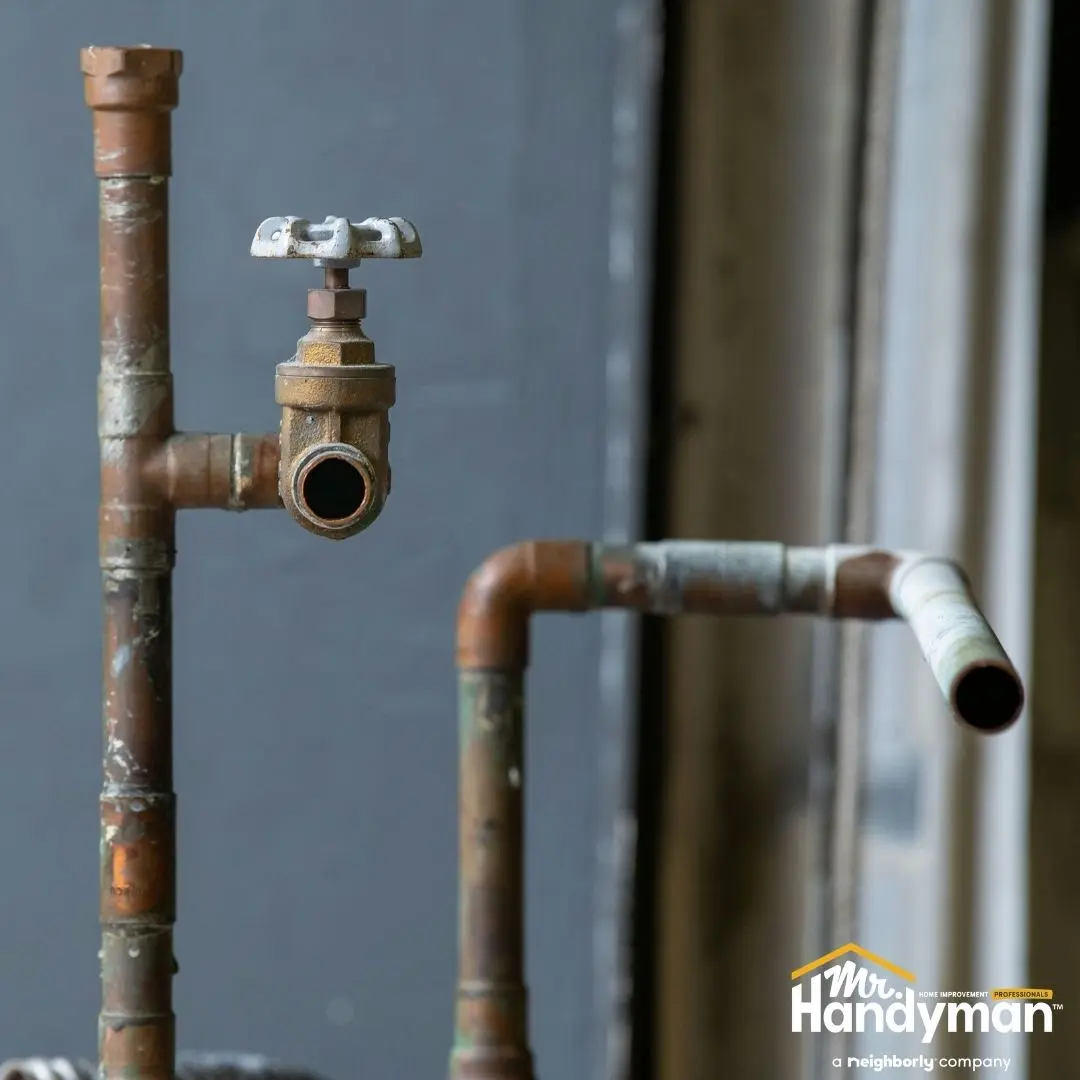
When the forecast in South Bend calls for sub-zero temperatures, it isn't just a matter of wearing a heavier coat. For homeowners, these extreme cold snaps represent a period of high risk for the structural and mechanical integrity of their property. In Northern Indiana, we are accustomed to snow, but sub-zero temperatures—especially when accompanied by the biting winds common in Elkhart—can push a home's plumbing system to its absolute limit. During these periods, water that is normally safe inside your walls can turn into ice in a matter of minutes if a draft is present.
At Mr. Handyman of Northern St. Joseph and Elkhart Counties, we see firsthand how quickly a "minor" cold snap can turn into a residential disaster. The physics of freezing water are relentless. As water freezes, it expands by approximately nine percent. Within the confined space of a copper or PEX pipe, that expansion creates thousands of pounds of pressure per square inch. Often, the pipe doesn't burst at the point where the ice is forming; instead, the ice acts as a piston, pushing the remaining liquid water toward a closed faucet until the pressure causes the pipe to rupture at its weakest point.
Understanding how to react in these sub-zero windows is the difference between a quick fix and a five-figure restoration project. Whether you are in Mishawaka or Granger, knowing the location of your main water shut-off valve and having a plan for emergency thawing is essential. If you find yourself facing a plumbing crisis when the mercury disappears, you can reach out to the professional team at Mr. Handyman of Northern St. Joseph and Elkhart Counties for expert guidance and repair.
Immediate Triage: What to Do When a Pipe Bursts
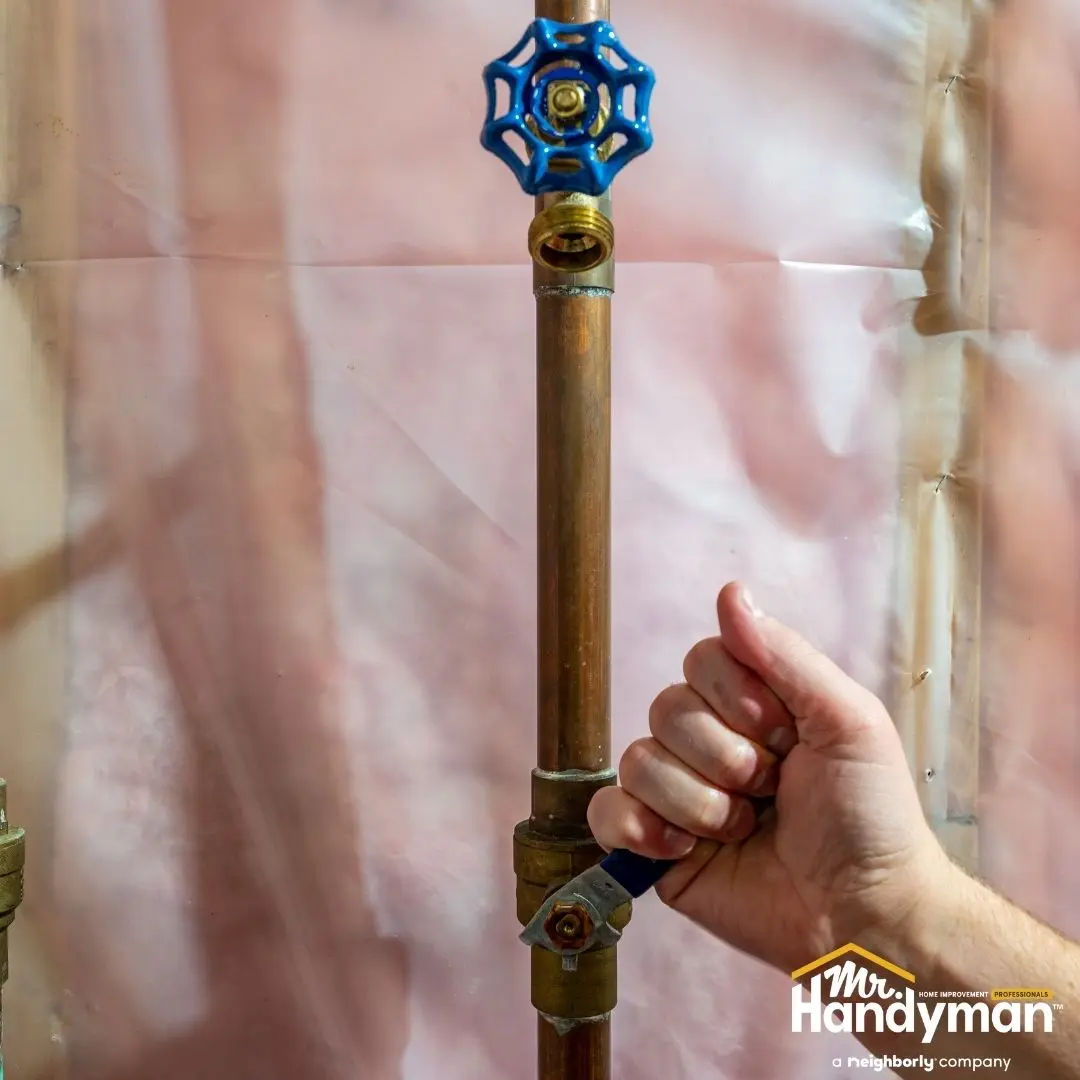
If the worst happens and you hear the unmistakable sound of rushing water or see a ceiling beginning to sag in your Goshen home, every second counts. The very first thing any homeowner must do is locate and close the main water shut-off valve. In most Northern Indiana homes, this is located in the basement or a crawlspace near the front of the house, often where the water line enters from the street or the well. If you have not yet identified this valve, do so immediately—before an emergency occurs. If the valve is difficult to turn, do not force it with a wrench, as you could snap the handle; instead, use steady pressure or call for professional assistance.
Once the water is off, the next step is to "depressurize" the system. Open every faucet in the house—both hot and cold—to allow the remaining water in the lines to drain out into the sinks rather than out of the break in the pipe. This is especially important in multi-story homes in Bristol, where water in the upper floors will naturally want to drain downward. After the pressure is relieved, turn off your water heater. If the water levels drop and the heater continues to run, it can damage the heating elements or, in extreme cases, lead to a tank failure.
Finally, begin the process of moisture mitigation. Use buckets to catch remaining drips and move furniture or electronics away from the affected area. In the sub-zero climate of Plymouth, wet materials can freeze quickly if the heat is also out, which complicates the drying process later. While you may be tempted to try a DIY patch on the pipe, these are rarely permanent solutions for the pressures found in modern plumbing. It is vital to have the section of pipe properly replaced by the experts at Mr. Handyman of Northern St. Joseph and Elkhart Counties. You can contact us to ensure the repair is handled to professional standards.
Identifying the "Hidden Freeze" (Before the Burst)

In the sub-zero stretches often felt in La Porte and Osceola, a pipe doesn't always burst the moment it freezes. Often, there is a grace period where the water has turned to ice, but the pipe wall is still holding. Identifying this "hidden freeze" is the most important skill a homeowner can have to prevent a catastrophic flood. The first sign is almost always a sudden change in water pressure at a single fixture. If you turn on the kitchen faucet in your New Carlisle home and only a trickle comes out, while the bathroom sink runs fine, you have a localized freeze.
Another telltale sign is a "banging" or "clunking" sound when you turn on a tap. This is often caused by ice chunks moving within the pipe or the dramatic pressure shifts occurring behind a blockage. Homeowners in Notre Dame should also be aware of strange odors coming from drains or faucets. If a vent pipe on your roof freezes over with ice—a common occurrence during lake-effect snowstorms—sewer gases can back up into the home because they have nowhere else to escape. This is a secondary type of "freeze" that requires immediate attention to ensure your home remains safe and breathable.
If you suspect a pipe is frozen, you can often find the culprit by following the plumbing lines through the basement or crawlspace. Look for frost on the outside of the pipes or sections that feel unnaturally cold to the touch. In Bremen and Walkerton, pipes located near rim joists or foundation vents are the most likely candidates for a freeze. If you see a pipe that looks slightly bulged or "swollen," it is under extreme stress and is likely about to rupture. At this stage, do not touch the pipe or attempt to move it. Instead, call Mr. Handyman of Northern St. Joseph and Elkhart Counties so a professional can assess the structural integrity of the line before it fails.
Thawing Pipes Safely (The Do’s and Don’ts)
Once you’ve identified a frozen pipe in Nappanee or Middlebury, the urge to thaw it quickly is understandable. However, this is the stage where many homeowners accidentally cause more damage to their homes. The "Golden Rule" of thawing pipes is to never use an open flame. Using a blowtorch or a propane heater to thaw a pipe is a leading cause of residential fires during Indiana winters. Not only is the flame a fire hazard, but the extreme, localized heat can cause the water inside the pipe to boil and turn into steam, which can lead to an explosive rupture of the pipe.
The safest way to thaw a pipe is through gradual, gentle heat. Start by opening the faucet associated with the frozen line; as the ice begins to melt, the flowing water will help melt the rest of the blockage. You can use a hair dryer on a low setting, moving it back and forth along the frozen section. For homeowners in Wakarusa and North Liberty, wrapping the pipe in towels soaked in hot water is another effective, albeit messy, method. If the pipe is behind a wall, you may need to increase the heat in that specific room or use an infrared heat lamp to warm the wall surface—just be sure the lamp is far enough away from any flammable materials.
Patience is required during this process. If you rush the thawing, you risk the pipe bursting just as the water begins to flow again. It is also vital to keep a close eye on the pipe as it thaws. Sometimes, the ice is actually acting as a "plug" for a hole that has already formed. As the ice melts, you may discover a leak that wasn't visible before. If you see water beginning to spray or seep, immediately shut off the main water valve. If the prospect of thawing a pipe in a cramped crawlspace or a cold attic in Lakeville seems too dangerous, Mr. Handyman of Northern St. Joseph and Elkhart Counties has the tools and experience to handle the job safely. You can reach our team for fast, reliable emergency assistance.
Protecting Vulnerable Systems: Wells, Pumps, and Basements
While many residents in South Bend are on municipal water, a significant portion of homeowners in Argos and Milford rely on private wells. In sub-zero temperatures, the "emergency" isn't always inside the walls of the house; it can be at the wellhead or in the pump house. If your well pump is located in an unheated outbuilding, the pressure switch is particularly vulnerable to freezing. When the tiny tube leading to the pressure switch freezes, the pump will not know when to turn on or off. This can lead to a total loss of water or, conversely, a pump that runs continuously until it burns out. Keeping a small, thermostatically controlled heater in your pump house is a critical sub-zero survival tactic.
Basements in Millersburg and New Paris also face a unique winter threat: the frozen sump pump discharge line. Most homeowners think of their sump pump as a spring-rain tool, but in Northern Indiana, mid-winter thaws or heavy snowmelt can trigger the pump at any time. If the discharge pipe that leads the water away from your house is frozen solid with ice, the water has nowhere to go. It will back up into the pump, causing it to work against a "dead head" until the motor fails, or worse, the water overflows back into your basement. Ensuring your discharge line has a "freeze relief" gap—a specialized fitting that allows water to escape near the house if the main line is blocked—is a lifesaver during a polar vortex.
If you notice your sump pump running but the water level in the pit isn't dropping, or if you hear a humming sound coming from your well house, do not wait for the system to fail completely. The temperature fluctuations in South Bend and Elkhart are too extreme to leave these systems to chance. Mr. Handyman of Northern St. Joseph and Elkhart Counties can help you inspect these exterior systems and install the necessary insulation or freeze-protection devices. Calling before the next sub-zero night could save you the cost of a new pump and a flooded basement.
Creating an Emergency Plumbing Kit
When the temperature drops below zero, the last thing you want to do is drive to a hardware store in Mishawaka in the middle of a blizzard. Every homeowner should have a "Plumbing Emergency Kit" ready to go. This kit isn't designed to perform permanent repairs, but rather to give you the tools needed to perform the "triage" steps we discussed in Module 2. First and foremost, your kit should include a dedicated, high-quality flashlight with extra batteries. Plumbing emergencies often happen in dark corners of the basement or during power outages, and you need to be able to see clearly to identify the source of a leak.
Your kit should also include several rolls of heavy-duty silicone repair tape (also known as "self-fusing" tape). This tape is not a permanent fix, but it can temporarily slow down a spray from a small crack in a pipe while you wait for the professionals from Mr. Handyman of Northern St. Joseph and Elkhart Counties to arrive. Additionally, keep a few "slip couplings" and a pipe cutter if you are comfortable with basic repairs, as well as a bucket and several old towels. For residents in Granger or Goshen, we also recommend keeping a few sheets of rigid foam insulation that can be quickly cut and taped over a drafty foundation vent or a rim joist in an emergency.
Finally, include a list of emergency contacts in your kit, including the number for Mr. Handyman of Northern St. Joseph and Elkhart Counties. In the stress of a burst pipe, your brain may not be functioning at 100%, and having the number ready can save precious minutes. We also suggest including a "Main Shut-off Tag"—a bright neon tag that you can hang on your main water valve so that even a houseguest or a teenager can find and close the valve in an emergency. Preparing this kit in October or November is a small task that pays massive dividends when the sub-zero winds start howling across Bristol.
Final Thoughts
Surviving a Northern Indiana winter requires more than just a good furnace; it requires a home that is resilient against the unique pressures of the cold. Sub-zero temperatures are a test of your home’s plumbing, insulation, and your own preparedness. By knowing where your shut-off valves are, recognizing the warning signs of a frozen pipe, and having the right tools on hand, you can protect your property from the devastating effects of water damage.
At Mr. Handyman of Northern St. Joseph and Elkhart Counties, we are proud to be a trusted partner for homeowners from South Bend to Elkhart and every town in between. We understand the local climate because we live here, and we know exactly what it takes to keep a home functioning when the weather is at its worst. If you are worried about your home’s winter readiness, or if you are currently facing a plumbing emergency, don’t hesitate. Reach out to the experts at Mr. Handyman of Northern St. Joseph and Elkhart Counties by calling. We are here to help you weather the storm and keep your home safe all season long. ❄️🏠🧤